Alabama State Flag Embroidery Design Review
As an embroidery designer who has spent countless weekends behind a craft fair table, I know that the difference between a browsing customer and a buying customer often comes down to visual impact and perceived quality. When I first pulled up the Alabama State Flag Embroidery Design on my digitizing software, my immediate thought was about versatility. This isn’t just a digital file; it is a potential revenue stream for anyone selling North America themed goods. The design carries a bold, patriotic weight that feels both rustic and premium, depending entirely on how you execute it. For handmade shop owners and Etsy sellers, understanding the nuance of this specific flag design is crucial for turning a simple download into a best-selling craft fair product.
First Impressions and Visual Appeal
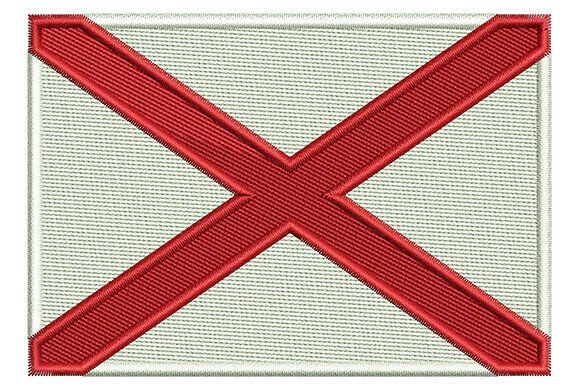
The Alabama state flag, with its distinctive crimson cross of St. Andrew on a white field, offers a striking geometric simplicity. In the world of Embroidery, simple shapes can be deceptive. They require clean stitch work to look professional. My review of this machine embroidery design suggests it leans towards a modern, minimal aesthetic rather than something overly decorative or fussy. This is a strength. In a crowded booth display, busy designs can sometimes get lost, but a bold, high-contrast flag design grabs attention from three feet away. It feels festive yet dignified, making it suitable for a wide range of customers, from college students showing school spirit to older generations proud of their heritage.
When evaluating the thread colors, the contrast between the deep crimson and the bright white is key. If you are stitching on white fabric, you must ensure the satin stitches are dense enough to prevent the background from peeking through. Conversely, on dark fabrics, the white portions of the flag will pop dramatically. This duality allows you to create two distinct product lines from the same digital embroidery file: one subtle and classic, the other bold and eye-catching.
Product Applications for Maximum Sales
The true test of any design is its adaptability. I mentally placed this Alabama State Flag Embroidery Design on various blanks to see where it would perform best. Here is how it stacks up across common handmade items:
- Tote Bags and Market Bags: This is perhaps the strongest application. A large hoop size allows the flag to be the focal point. As a tote bag design, it appeals to locals carrying groceries or books. It is practical, visible, and serves as a walking advertisement for your brand.
- Aprons and Tea Towels: For kitchenware, scale matters. An apron embroidery placement on the bib or pocket works well if the design is resized appropriately. For tea towel embroidery, ensure the stitch density does not make the towel stiff or unusable. Customers want functionality alongside aesthetics.
- Embroidered Patches: The description mentions this is an American State Flag Patch style. Patches are incredibly popular at craft fairs because they are low-commitment purchases for buyers. You can sew these onto denim jackets, hats, or backpacks. They are also easy to ship for online orders.
- Caps and Hats: Stitching on curved surfaces requires care. If you choose to put this on a cap, use a sturdy stabilizer and consider a smaller version of the design to fit the front panel without distorting the fabric.
- Pillow Covers: A centered flag on a neutral linen pillow cover creates a high-end, farmhouse look. This elevates the perceived value of the finished product, allowing you to charge a premium price.
Production Practicalities and Technical Notes
Before you commit to batch production, there are technical realities to address. The product description lists included formats like PES, DST, EXP, HUS, JEF, CSD, and XXX. This wide compatibility is excellent for users with different machine brands. However, the description cuts off at "Design Sizes Inclu," which means you must verify the exact dimensions and hoop requirements before purchasing or producing. Never assume a design fits your standard 5x7 hoop without checking.
Stitch density is another critical factor. Flags often use satin stitches for the colored bars. If the density is too high, the fabric may pucker, especially on lighter materials like cotton tea towels. If it is too low, the backing will show. I always recommend running a test stitch-out on scrap fabric identical to your final product. Check the back of the embroidery as well; messy bobbin work can ruin the comfort of wearable items like aprons or shirts.
Consider the fabric texture. Thick, textured towels can swallow small details. If this design includes any tiny elements or lettering (though the Alabama flag is primarily geometric), ensure they remain legible on textured surfaces. For dark fabrics, you may need to use a white underlay or stabilizer to ensure the crimson red appears vibrant and not muddy.
Boosting Your Brand and Booth Display
For the Etsy seller or boutique maker, consistency is key. Using the Alabama State Flag Embroidery Design across a collection—matching tote bags, patches, and pillows—creates a cohesive look that strengthens brand identity. When setting up your craft fair booth, use these items to create a "hero display." Place the largest, most impressive item at eye level. Use the patches as impulse buys near the register.
Photography plays a huge role in online sales. Create a printable mockup or, better yet, photograph real samples in natural light. Show the texture of the threads. Close-up shots of the stitch quality build trust with buyers who cannot touch the product. Highlight the fact that these are handmade, not mass-produced imports. The slight variations in handmade commercial embroidery are often seen as a mark of quality and care by discerning customers.
Final Designer Verdict
The Alabama State Flag Embroidery Design is a solid addition to any designer’s library, particularly for those targeting the Southern US market or patriotic themes. It is versatile, recognizable, and emotionally resonant. However, its success depends entirely on execution. Do not skip the step of checking the hoop size compatibility and testing your stabilizer choices. Ensure you have the correct commercial licensing rights if you plan to sell the finished product rather than just the file itself. By treating this design with the respect it deserves—careful thread selection, precise hooping, and thoughtful product placement—you can turn a simple digital asset into a staple of your small shop product line. It is a design that rewards attention to detail, offering a professional look that stands out in both physical markets and digital storefronts.